
Deep Cleaning vs. Regular Cleaning: The Key Differences
To understand why a deeper scrub feels entirely different from routine housekeeping, it helps to distinguish between surface maintenance and intensive cleaning. Standard upkeep handles the visible messes of daily living: doing dishes, clearing kitchen counters, vacuuming middle-of-the-room walkways, and quickly wiping down the bathroom sink. It keeps chaos at bay, but it rarely tackles the grime that quietly settles into architectural corners, baseboards, and fixture crevices.
Deep cleaning, by contrast, targets stubborn, accumulated dirt and built-up grease that standard passes leave untouched. We scrub grout lines, hand-wash baseboards, remove limescale from shower assemblies, wipe down doors, and reach behind reachable furniture.
| Cleaning Area / Task | Regular Maintenance Cleaning | Full Deep Cleaning Service |
|---|---|---|
| Kitchen Counters & Sink | Surface wipe-down and quick sink rinse | Detailed descaling, backsplash degreasing, and polished drains |
| Kitchen Cabinetry | Spot-cleaning around handles | Full hand-wiping of exterior faces, trim, and frame edges |
| Bathroom Shower & Tub | Quick surface spray and rinse | Intensive soap scum removal, tile grout scrub, and fixture descaling |
| Toilets | Interior bowl brush and seat wipe | Complete sanitation, including base, floor bolts, and behind the unit |
| Baseboards & Trim | Quick top-edge feather dusting | Hand-washing scuffs, grime, and settled dust from edge to edge |
| Doors & Switch Plates | Rarely touched during quick visits | Detailed disinfection of high-touch handles, frames, and plates |
| Floors | Central vacuuming and quick surface mop | Deep edge crevice vacuuming, under-furniture cleaning, and damp hand-mopping |
| Ceiling Fans & Vents | Visual check or bypassed | Step-ladder high dusting of fan blades, light housings, and vent grilles |
Many homeowners discover that understanding how regular cleaning services can save you time and stress begins with establishing an initial clean baseline. Once that deep grime is stripped away, shifting into scheduled recurring cleaning services takes far less time and effort to maintain.
The Core Purpose of Intensive Cleaning
Intensive cleaning serves as an essential reset for your home’s indoor hygiene. Over months of everyday living, homes trap airborne cooking oils, dead skin cells, pet dander, mold spores, and dust mites. These particles do not stay suspended forever—they settle onto window tracks, high cabinet tops, HVAC return vents, and behind heavy beds.
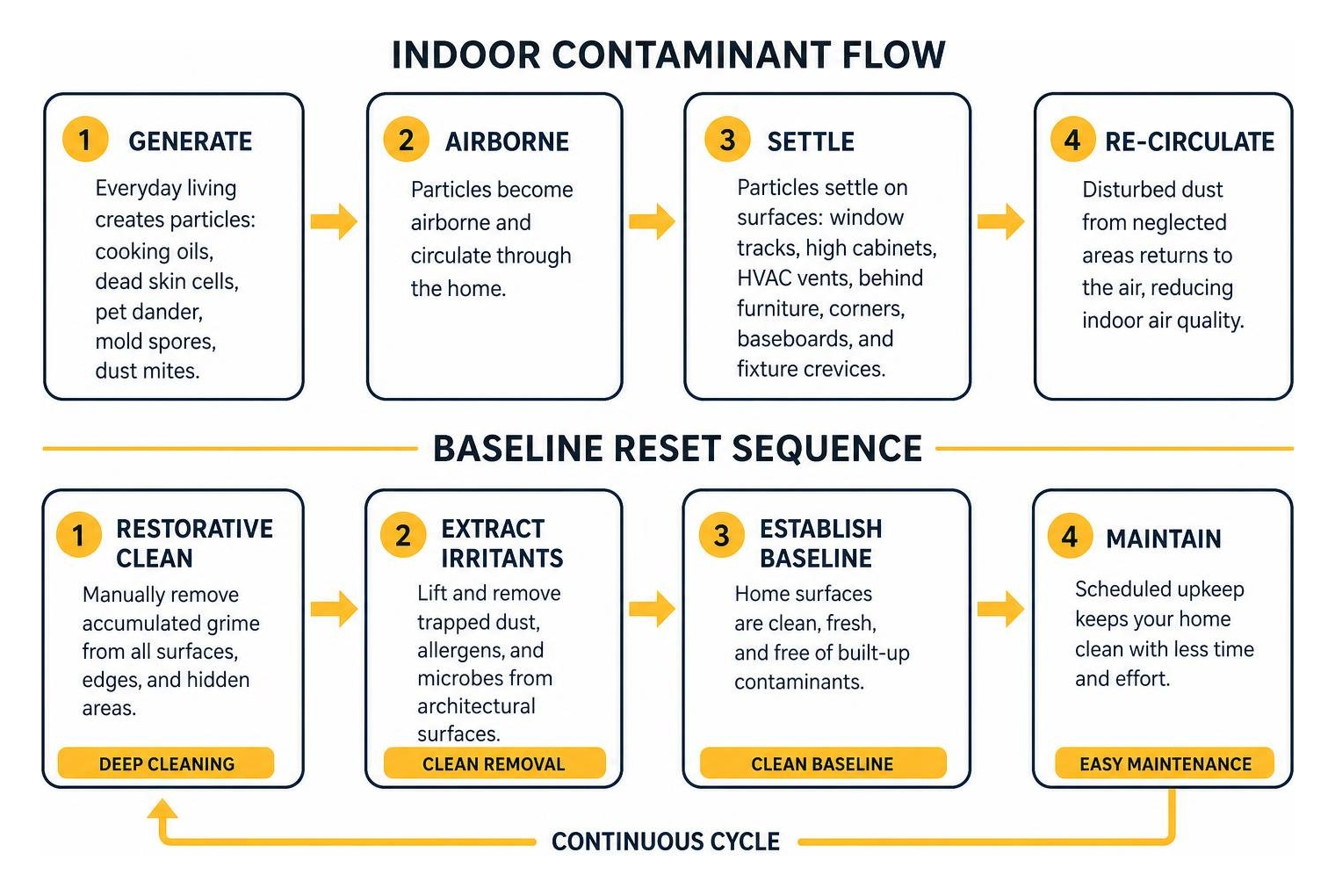
When dust settles into neglected corners, standard vacuuming can stir it up into the air you breathe. Discovering how regular cleaning services can enhance indoor air quality begins with this comprehensive first step: manually extracting trapped irritants from architectural surfaces.
To prevent spreading germs between rooms, professional cleaning protocols use dedicated, color-coded microfiber cloths—keeping cloths used for bathroom sanitation completely isolated from those used for food-prep counters and living area furniture.
When to Choose Deep Cleaning Over Routine Care
While routine upkeep is ideal for week-to-week maintenance, certain situations require a comprehensive, ground-up reset:
- Initial Service Baseline: Before starting weekly or bi-weekly cleaning visits, a deep clean establishes a pristine standard so future visits run smoothly.
- Seasonal Resets: As seasons shift in the Treasure Valley—clearing out winter woodsmoke residue in spring or eliminating dry summer dust and pollen in early autumn.
- Post-Renovation or Dust Events: Clearing the fine airborne construction dust that settles on light fixtures, interior door ledges, and vent grates after remodeling.
- Pre-Event or Holiday Hosting: Preparing guest bedrooms, sparkling up high-traffic bathrooms, and degreasing kitchens before welcoming family.
- Pet and Allergy Flare-Ups: Homes with shedding dogs or cats accumulate dander in floor seams, under low furniture, and along baseboard trims that require intensive extraction.
Room-by-Room Checklist: What Deep Cleaning Includes Across Your Home
A thorough deep cleaning follows a strict top-to-bottom, dry-to-wet room methodology. By starting high—at ceiling corners, fan blades, and upper moldings—any dislodged dust falls downward to be vacuumed and mopped away at the end of the clean.
Professional standards typically cover a 47-task benchmark across the entire house, systematically addressing horizontal and vertical surfaces alike. For home care enthusiasts who appreciate systematic planning, Martha Stewart’s room-by-room deep cleaning checklist highlights how structuring tasks by room prevents missed spots and cleaning fatigue.
Kitchen and Bathrooms: What Deep Cleaning Includes for High-Grime Zones
Kitchens and bathrooms endure the highest exposure to moisture, cooking oils, and daily foot traffic, making them the most labor-intensive portion of any deep clean.
In the Kitchen:
- Cabinetry Detailing: Hand-washing upper and lower exterior cabinet faces, drawer fronts, and hardware to remove the sticky film caused by airborne cooking steam.
- Backsplash & Range Hood Degreasing: Breaking down grease splatter along tile backsplashes, exhaust hoods, exterior filters, and stovetop dials.
- Stovetop Teardown: Scrubbing burner grates, cooktop glass, drip pans, and control knobs.
- Countertop & Appliance Exteriors: Sanitizing solid surfaces, moving small countertop appliances to scrub beneath them, and polishing stainless steel facades on dishwashers and refrigerators.
- Microwave Interior: Steaming, degreasing, and sanitizing interior turntables, ceiling splatters, and door seals.
- Sink & Drain Descaling: Scrubbing sink basins, polishing chrome or matte black faucets, and clearing limescale around faucet bases.
In the Bathrooms:
- Tile & Grout Scrubbing: Using targeted detail brushes to lift embedded mildew, dirt, and orange mineral deposits from tile grout lines.
- Shower Surround & Tub Cleaning: Cutting through built-up soap scum along acrylic tubs, glass shower doors, tracks, and tile surrounds.
- Fixtures & Mineral Descaling: Removing hard water scale from showerheads, aerators, handles, and drain rims.
- Complete Toilet Sanitation: Scrubbing the bowl interior, wiping exterior porcelain, detailing the hinge covers, disinfecting floor bolts, and mopping the floor directly behind the toilet base.
- Vanity & Medicine Cabinets: Polishing vanity mirrors streak-free, disinfecting countertops, wiping sink basins, and cleaning exterior cabinet doors.
Living and Sleeping Spaces: What Deep Cleaning Includes for Living Rooms and Bedrooms
Living rooms, hallways, and bedrooms harbor significant amounts of airborne dust, fabric lint, and pet dander. Deep cleaning these zones focuses on vertical reach, soft textiles, and hidden floor areas:
- Ceiling Fans & High Light Fixtures: Hand-wiping stationary fan blades, light globes, and decorative hanging fixtures.
- Window Sills, Tracks, and Frames: Vacuuming loose dirt, insect debris, and blowing dust from window sill tracks and wiping surrounding window casings.
- Upholstery & Under-Furniture Care: Vacuuming upholstery crevices, lifting sofa cushions, and using low-profile extension wands to clean under sofas, credenzas, and bed frames.
- Mirror & Glass Polishing: Removing fingerprints and smudges from interior French doors, entryway glass, and decorative wall mirrors using streak-free techniques and eco-friendly cleaning solutions.
- Detailed Dusting: Hand-dusting picture frames, decorative shelving, lampshades, television stands, and open shelving units without merely pushing dust into the air.
Overlooked Details: Baseboards, Vents, and High-Touch Fixtures
The true difference between a superficial clean and a deep clean lies in the architectural trim and high-contact contact points that are easily missed during routine maintenance:
- Baseboard Hand-Washing: Wiping baseboards throughout every hallway, bedroom, and living space to remove scuffs, pet hair, and settled gray dust.
- Door Frames & Trim: Wiping the upper horizontal ledges of interior doors, door panels, and door trim casings.
- HVAC Returns & Vent Grilles: Vacuuming and wiping air return grates and supply registers to prevent dusty buildup from recirculating into your home.
- High-Touch Disinfection: Wiping light switch plates, wall outlet covers, interior door knobs, and stair railings.
- Staircase Detailing: Vacuuming stair treads, detail-cleaning hard-to-reach corner edges, and wiping handrails and vertical spindles.
- Trash Cans: Disinfecting the interior and exterior of room wastebaskets and recycling bins.
What Is Excluded From Standard Deep Cleaning and Common Add-Ons
To keep expectations clear, understand that a standard deep cleaning focuses on the structural surfaces, fixtures, and exterior faces of your furnished home. Tasks that require extensive extra time, specialized mechanical equipment, or significant disassembly are typically offered as separate add-on options or handled by specialized trades.
Standard Exclusions (Usually Require Dedicated Add-On Booking)
- Inside the Oven: Heavy chemical or high-heat degreasing of baked-on carbon inside the oven cavity and on wire racks.
- Inside the Refrigerator & Freezer: Emptying food containers, defrosting, and sanitizing interior refrigerator shelving, door bins, and crisper drawers.
- Inside Kitchen and Bathroom Cabinets: Emptying, vacuuming, and wiping down interior shelving (standard in move-out cleanings, but an add-on for furnished deep cleanings).
Tasks Typically Outside the Scope of Residential Cleaners
- Exterior Pressure Washing or Gutters: Outdoor patios, siding, roofing, and garage exteriors.
- Biohazard Remediation: Cleaning animal waste, mold infestations requiring remediation specialists, or bodily fluids.
- Excessive Decluttering or Hoarding Cleanout: Sorting through large volumes of unorganized paperwork, clothing piles, or personal clutter.
- Moving Extremely Heavy Furniture: Moving 300-pound armoires, sub-zero refrigerators, or connected washers/dryers (cleaners clean under and around accessible items to protect floors and plumbing lines).
- Interior/Exterior Full Window Pane Washing: Washing full pane glass beyond accessible interior spot cleaning.
- Carpet Steam Extraction & Shampooing: Hot-water extraction for deep carpet stains.
Time Expectations and Frequency for Different Home Sizes
Deep cleanings are labor-intensive projects. Because technicians spend significant time hand-wiping trim, scrubbing grout, and detailing fixtures, a deep clean typically requires more labor time than a standard recurring maintenance visit.
Older homes with intricate baseboards, divided window lites, and vintage moldings often take longer than newer construction with flat, minimalist trim. Homeowners planning a seasonal refresh can check our guide to spring cleaning in the Treasure Valley to align scheduling with local weather patterns.
The table below outlines typical labor hours and crew deployments for residential deep cleanings:
(Note: Appointment length varies depending on the home’s starting condition, pet presence, and whether interior appliance add-ons are selected.)
Recommended Deep Cleaning Schedules
How often should your home undergo this level of intensive cleaning? Use these lifestyle benchmarks to set your schedule:
- Every 6 Months (Biannual): The standard baseline for typical households maintaining recurring weekly or bi-weekly cleaning upkeep. A spring reset and fall refresh keep grime from building up.
- Every 3 Months (Quarterly): Highly recommended for homes with multiple shedding pets, active children, or busy indoor-outdoor lifestyles.
- Every 6 to 8 Weeks: Ideal for households where family members suffer from acute asthma, seasonal dust allergies, or immune sensitivities.
- Annually (Once Per Year): The bare minimum for low-traffic, single-occupant homes that maintain light routine tidying year-round.
How to Prepare Your Home to Maximize Deep Cleaning Results
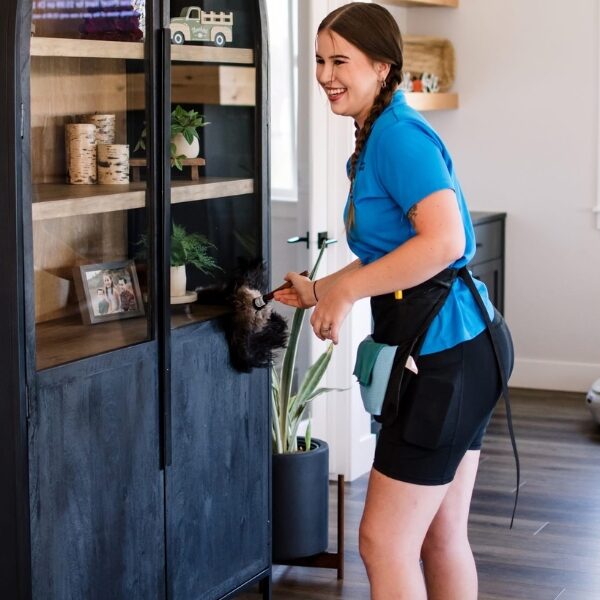
You do not need to “clean before the cleaners arrive,” but taking a few simple prep steps ensures your cleaning team spends their time scrubbing grime rather than organizing personal items.
- Clear Countertops and Horizontal Surfaces: Place toiletries, makeup, paperwork, and kitchen gadgets into bins or drawers. Clearing vanity tops and counters gives technicians direct access to scrub tiles and backsplashes.
- Pick Up Floor Clutter: Pick up scattered shoes, toys, dirty laundry, and floor pet beds so technicians can immediately run edge-crevice vacuums and floor mops.
- Secure Pets Comfortably: Deep cleaning involves unfamiliar equipment, open doors, and vacuum noise. Place dogs and cats in a secure, comfortable room or arrange for them to enjoy daycare during the appointment.
- Communicate Priorities in Advance: If your shower grout needs extra attention, or if a specific guest bedroom is rarely used and needs only light dusting, let your cleaning team know before work begins.
- Coordinate Clear Access: Ensure entry codes, gate remotes, or lockbox keys are confirmed ahead of time.
Learning practical habits for maintaining a clean home between professional cleanings will help preserve these pristine results long after the cleaning crew leaves.
Frequently Asked Questions About Deep Cleaning Services
What Is the Difference Between Deep Cleaning and Move-Out Cleaning?
While both services share an intensive scrubbing standard, a move-out cleaning occurs in an entirely empty home. Move-out cleanings automatically include wiping the inside of all empty kitchen cabinets, pantry shelves, bathroom vanity drawers, bedroom closet shelves, and cleaning inside major appliances like the oven and refrigerator. Deep cleanings focus on detailed grime removal within furnished, lived-in homes.
Do You Need to Be Home During a Professional Deep Cleaning?
No, you do not need to be present while the cleaning takes place. Many clients provide a garage keycode, front door smart-lock PIN, or lockbox key, allowing technicians to clean while they are at work or running errands. You are welcome to be home during the clean, provided technicians have clear access to move between rooms.
Conclusion
A comprehensive deep clean improves hygiene, freshens indoor air quality, and preserves the architectural finishes of your home. By reaching the overlooked spots—from baseboard edges and vent grates to kitchen grease and bathroom scale—a deep clean resets your living environment to a spotless baseline.
At Favorite Day Maid, we take pride in caring for homes across the Treasure Valley, including Boise, Meridian, Eagle, Star, Middleton, Kuna, Caldwell, Nampa, and Garden City. Our background-checked, insured cleaning professionals use high-quality, eco-friendly products and back every visit with a 100% satisfaction guarantee.
Ready to enjoy a truly refreshed home without losing your weekend to scrubbing? Contact our friendly local team to schedule professional deep cleaning services today.
